Hanes Distribution / Industry Insights
Geopolitics, freight rates, Maersk and carrier data, NZ construction consents, material prices, economic indicators β everything shaping the building industry and your procurement decisions, in one place.
Latest Coverage

Major Shipping Carriers
The global container shipping market is dominated by a small number of major carriers β each running thousands of vessels and millions of TEUs of capacity. Understanding which carriers operate AsiaβNZ routes, their market positions, and current rate trends helps NZ importers make better freight decisions.
| Carrier | TEU Capacity | AsiaβNZ Routes | Current Rate Trend | Transit (ShanghaiβLttn) | Key Notes for NZ Importers |
|---|---|---|---|---|---|
| Maersk Denmark | ~3.6M TEU | Multiple weekly sailings via direct and transhipment. Strong Lyttelton coverage. | β Stabilising | 23β27 days | Industry benchmark. Spot rates stabilising post-2024 spike. Contract rates preferable for consistent NZ importers. Vessel sizes increasing β some transhipment via Singapore/Port Klang. |
| MSC Switzerland | ~5.5M TEU | World's largest fleet. Active AsiaβANZ with strong frequency and capacity. | β Stable | 22β26 days | Largest carrier globally post-2M alliance split. Competitive on AsiaβANZ. Split from 2M Alliance (Maersk) in 2024 β now operating independently. Strong NZ coverage. |
| CMA CGM France | ~3.4M TEU | Strong AsiaβPacific coverage. Multiple weekly AsiaβNZ services. | β Slight easing | 23β28 days | Part of Ocean Alliance with COSCO and Evergreen. Competitive on AsiaβNZ. Acquired Ceva Logistics β expanding end-to-end logistics offering beyond pure shipping. |
| COSCO / OOCL China | ~3.0M TEU | Strong China-origin capacity. Key for NZ importers buying from Chinese manufacturers. | β Stable | 22β26 days | Chinese state-owned carrier β strong on China origin volumes. Ocean Alliance partner. Expanding NZ capacity in 2026. Competitive pricing on Shenzhen/Shanghai origins. |
| Hapag-Lloyd Germany | ~2.2M TEU | AsiaβPacific coverage via Gemini Alliance (with Maersk from 2025). | β Stable | 24β28 days | Joined Gemini Alliance with Maersk in Feb 2025. Strong reliability focus β scheduling and port call reliability a key differentiator. Suitable for time-sensitive NZ project supply. |
| Evergreen Taiwan | ~1.6M TEU | Active AsiaβANZ via Ocean Alliance. Consistent NZ presence. | β Stable | 24β30 days | Ocean Alliance member. Consistent AsiaβANZ coverage. Vessel sizes moderate β generally good for NZ port calls without excessive transhipment. Competitive for volume importers. |
| ONE (Ocean Ntwk Express) Japan | ~1.5M TEU | Strong from Japanese and Korean origin. Active AsiaβNZ via Premier Alliance. | β Easing | 23β27 days | Formed from merger of K-Line, MOL, NYK. Premier Alliance member. Good for multi-origin Asian supply chains. Rates easing modestly in 2026. |
| Yang Ming Taiwan | ~0.7M TEU | Moderate AsiaβANZ presence. Premier Alliance partner. | β Stable | 25β30 days | Smaller footprint but competitive pricing. Good option for volume importers looking beyond the top 3. Premier Alliance coordination with ONE and HMM. |
β All carrier data indicative β April 2026. TEU capacities, rates, and alliances subject to change. Confirm with freight forwarder at time of booking. Information compiled from public sources including Alphaliner, carrier websites, and industry publications.
Geopolitics & Trade
New Zealand sits at the end of long international supply chains β making the country particularly exposed to global disruptions. When shipping lanes are blocked, tariffs escalate, or manufacturing capacity tightens in key regions, the effects flow directly into NZ material costs, lead times, and project budgets.
The period since 2021 has been one of the most volatile in modern supply chain history. COVID-19 port disruptions, Red Sea rerouting following Houthi attacks, USβChina trade tensions, and European energy inflation have created a compounding effect that NZ importers are still navigating in 2026.
For builders, developers, and procurement teams, working with supply partners who plan around disruption β rather than react to it β is the difference between projects running on schedule and projects facing costly delays. Hanes Distribution's Hong Kong coordination office provides direct early-warning visibility into manufacturing and freight conditions across Asia.
Global Supply Chain Risk Monitor β April 2026
NZ Construction Data
| Region | Annual Consents (Est.) | Share of NZ Total | Volume Indicator | YoY Trend | Key Build Activity |
|---|---|---|---|---|---|
| Auckland | 15,200+ | ~41% | β² Elevated | High-density infill, townhouse, apartment. NPS-UD driving density uplift across all zones. | |
| Canterbury | 4,800+ | ~13% | β² Active | Greenfield Selwyn/Waimakariri, Christchurch City intensification. Strong pipeline in Rolleston, Lincoln, Halswell. | |
| Wellington | 3,100+ | ~8% | β Stable | Infill townhouse, apartment. Hutt Valley corridor active. Government sector activity supporting commercial. | |
| Waikato | 2,800+ | ~8% | β² Growing | Hamilton greenfield expansion, Te Kauwhata, Pokeno. Significant residential growth corridor south of Auckland. | |
| Bay of Plenty | 1,900+ | ~5% | β² Active | Tauranga growth. Papamoa, Te Puke, Western Bay residential expansion. Strong lifestyle and retirement demand. | |
| Northland | 950+ | ~3% | β Stable | Whangarei growth. Lifestyle block and residential. Northland Infrastructure investment improving activity. | |
| Otago / Southland | 1,800+ | ~5% | β² Steady growth | Dunedin intensification, Queenstown-Lakes tourism/residential, Frankton expansion. Strong Southern Lakes pipeline. | |
| Other Regions | 6,650+ | ~18% | β Varies | Nelson/Marlborough, Hawke's Bay, Manawatu, Taranaki and other regional centres. |
All consent figures indicative β based on MBIE and Stats NZ historical trend data. Annual figures approximate and subject to revision. Consult Stats NZ (stats.govt.nz) and MBIE Building Consents statistics for official current data.
Economic Indicators
Key economic indicators affecting the NZ building sector β from interest rates to construction cost inflation. These factors directly influence developer confidence, project viability, and material procurement decisions.
Material Price Intelligence
Building material prices are influenced by global commodity markets, freight costs, currency movements, supply chain disruptions, and local demand. Overview of price trends across key Hanes Distribution product categories β indicative only. Always confirm at time of quotation.
β All price intelligence indicative and general only. Actual pricing depends on specifications, volumes, lead times, and market conditions at time of order. Request a formal quotation from Hanes Distribution for project pricing. Not for use as a formal cost estimate without written confirmation.
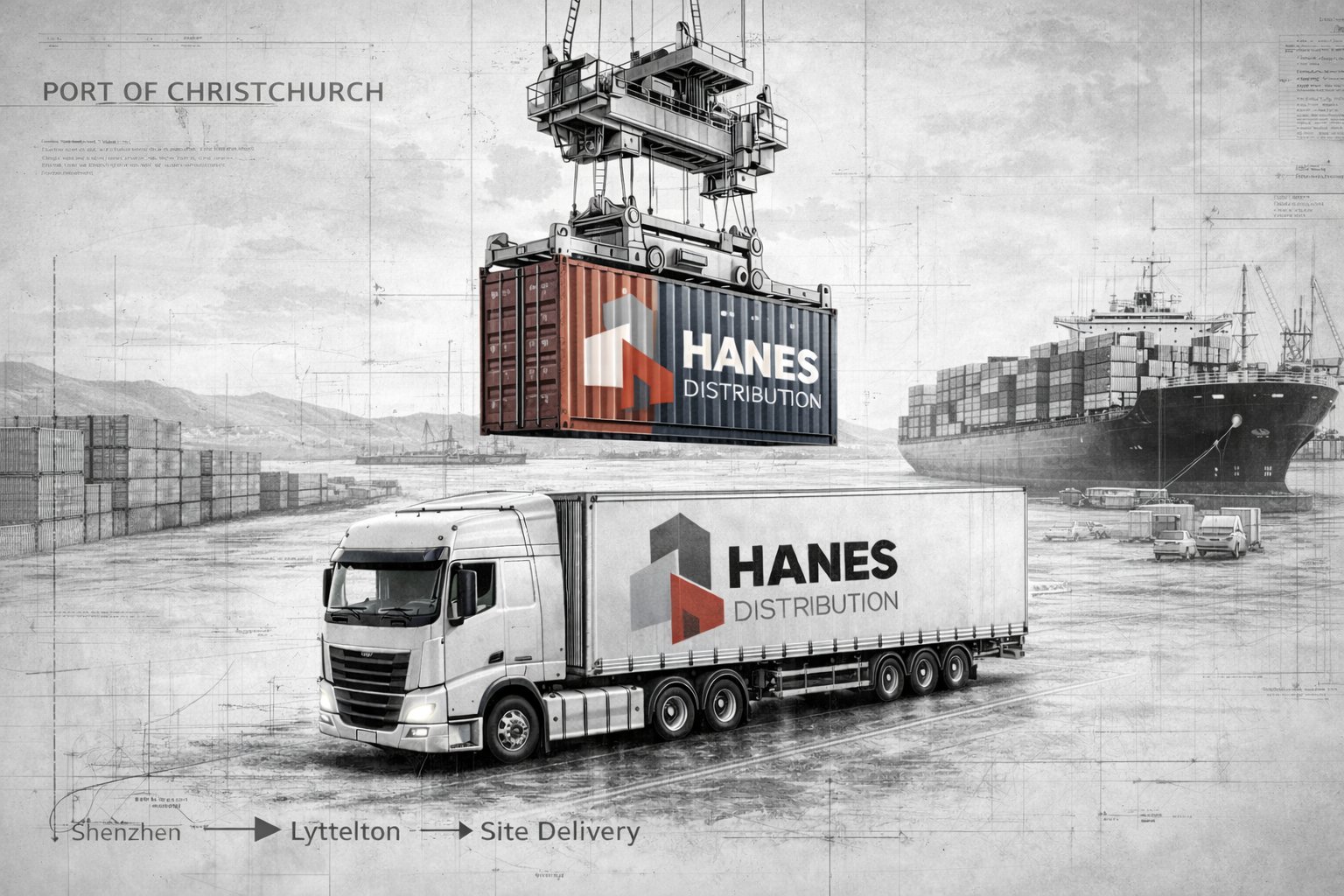
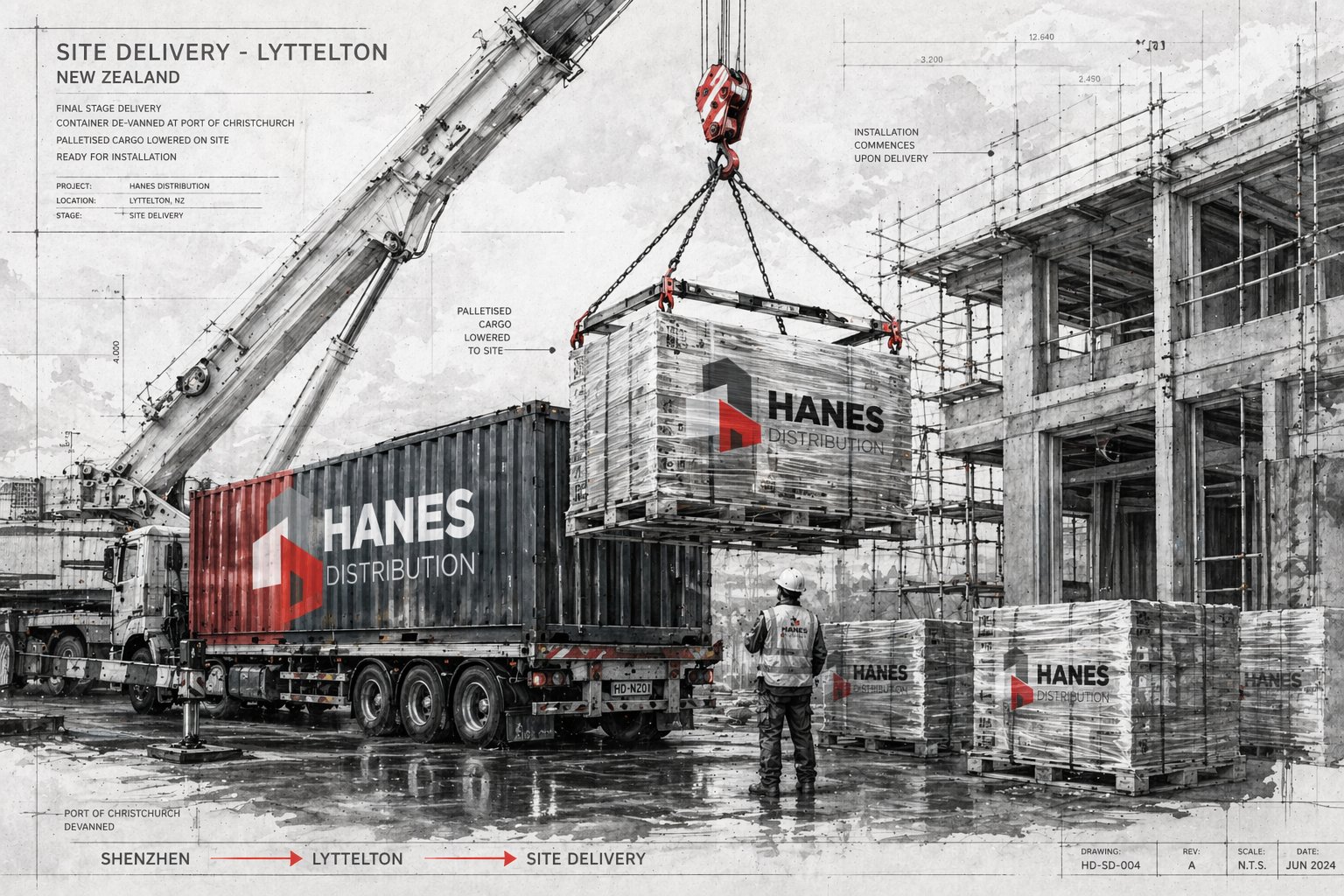
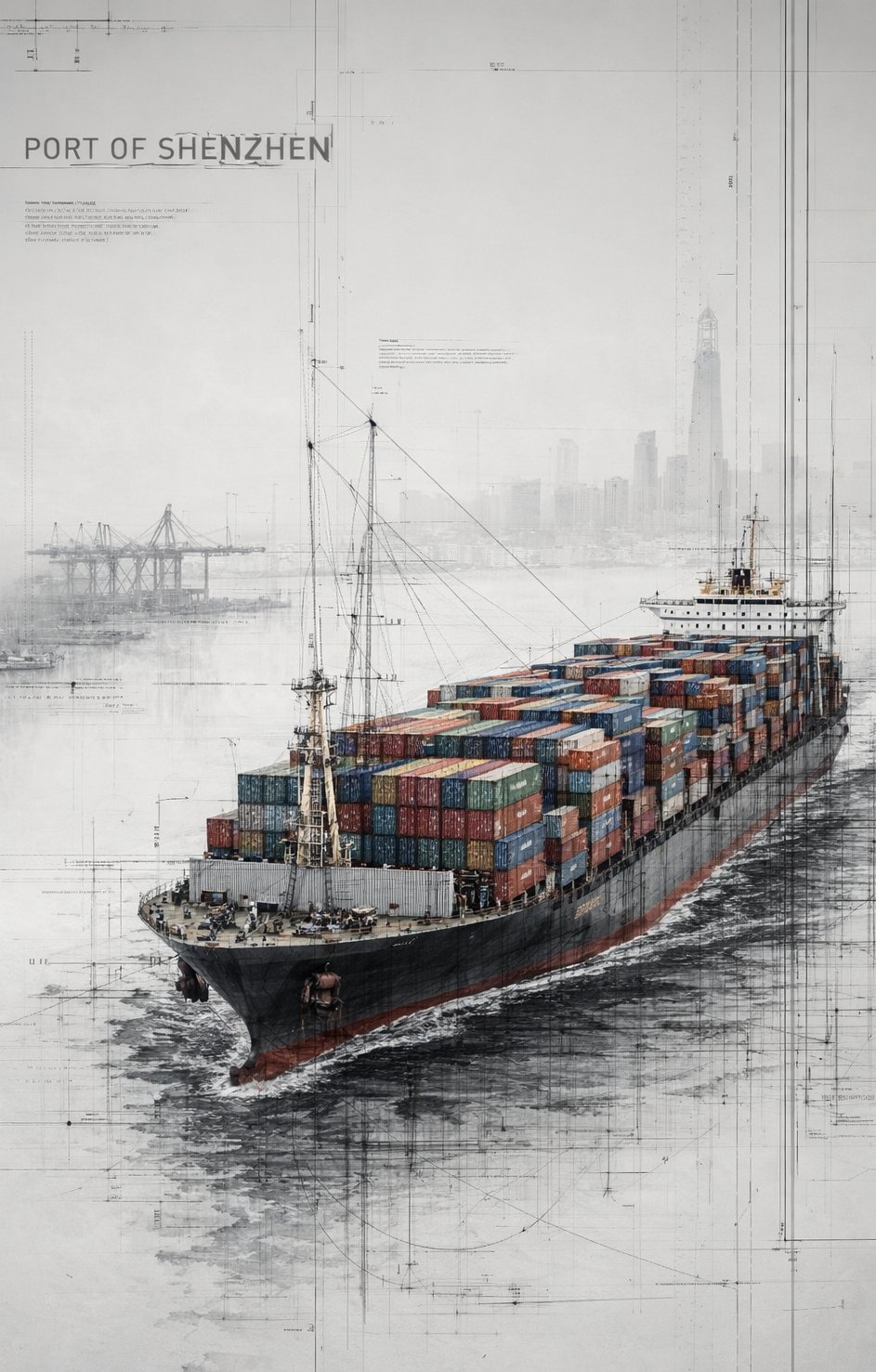
Our Supply Chain
Understanding the full journey helps clients plan accurate lead times, set procurement windows, and avoid delays that come from underestimating transit and handling time.
All Articles